Tuesday, September 27, 2011

A Movie within a Movie


            Cinema Paradiso was not an ordinary type of film simply telling of a moral or having a happy ending. It was like watching a movie within a movie. But one thing that I love about this movie is the way it made you ask yourself; who or what you prioritize in your life.

            The film was about a young boy, Toto, who lived his childhood learning how to run the projector powered movie house, the cinema paradise, which was run by that during the 1940’s. He’d spent all his free time going there, befriending the projectorist, and stole the spliced out films which the priest thought of as obscene. But a day almost ruined everything as the film Toto stole caught fire and almost burned their house. His war-widowed mother beat him up and threatened him not to go to the cinemas. Alfredo obeyed the mother’s command but with Toto’s wit and charms, he was allowed to come in again. Unfortunately, Toto misbehaved which made Alfredo’s decision firm in keeping Toto out of the cinema paradiso. During an examination of which both Alfredo and Toto took, an assurance of friendship was built as Toto allowed Alfredo to copy his answers. Alfredo thought Toto everything he knows until such time a tragedy happened. While Alfredo showed the people a movie, the film caught fire and burned the cinema leaving him blind. Someone bought it and built a bigger and better cinema and the projectorist was Toto, allowed even at a very young age and still being guided by Alfredo. As he turned 16, young and bold, he fell in love. Alfredo thought that it would ruin Toto’s future so he did things and lied to him just to keep them away from each other. Toto still tried to look for her despite the years until he found out she was married to someone else, his friend. Although Toto and his lover, Elena, never got together as planned, he still became a famous movie maker.

            The film was character driven focused on Salvatore 'Totò' Di Vita played first, as a child, by Salvatore Cascio. He was very effective not just because of his acting but also because of his physique. He was right for his character of cleverness and adorableness. The teenaged Toto, played by Marco Leonardi, was effective as well. His looks melted the women’s hearts away and had made the men jealous. The all grown Toto, played by Jacques Perrin, was effective as well but there were times when his emotion went blank and unfelt. Philippe Noiret, as Alfredo, did great in his role as an adviser, a friend, and a father. He talked and acted the way anyone would picture a projectorist. The other characters, like Agnese Nano who played Elena, did great as the pretty blue eyed girl who made shifts in the film. The setting, including the language, was very effective. It has given the people a peep on how Italy looked like and how the Italians admired films which is, of course, effective for the suspension of disbelief. Sex was not much shown which I did expect it to be, for during those times, kissing was already found obscene. Music, on the other hand, was properly used; relieving some dull moments. The theme of the film was basically about love and loyalty to a friend, family, lover, and dreams. Toto kept his love and had remained loyal to his lover despite the years that had passed by. He remained to love his profession despite the things he had been missing. He had remained loyal and loving to a friend who had devoted his life to give him a brighter future. But the film was not just about that, it had also brought up a rhetorical question: Would you choose your lover over your dream, or vice versa?

            There were a lot of symbolisms but some were quite hard to depict. One would be the anchors scattered on the shore where Toto goes whenever he was depressed. It symbolized Toto’s attachment to their place and the memories that he kept holding on to which kept pulling him down. The Cinema was at the heart of the town, it was more prioritized by the people. It symbolizes the old town, the old ways of the people before the dawn of modernism and technology. The film done by Alfredo symbolized his great love for Toto. It also symbolizes the connection that they had. The projector that went through the lion’s mouth symbolizes the job of a projectorist. It may be small but it gives a huge help for the viewers but by doing so, he must pass through certain hardships like being alone and being like a slave. Lastly, the fire that blinded Alfredo symbolized the change, not just for Alfredo, but also for Toto and the town as well.

Unlocking doors for new opportunities


There are families where parents decide for their children’s future. They act as an oracle giving prophesies for their children. Luckily today, such manners are minimally done. Parents today allow their children to follow and do what they want as long as it is legal, appropriate, and could assure a bright future.

The film Billy Eliot by Stephen Daldry was character oriented. It had focused on a young boy, Billy Elliot, who lost his mother at a young age and was trained by his father to be a boxer. It was clearly seen that Billy was incapable of playing well which led him to stay longer for practice and to wait until their neighboring class, ballet, would finish. As he peeped, he was enticed until he joined the class. The teacher, Mrs. Wilkinson, saw Billy’s potential as a dancer and encouraged him to continue and to audition in Royale Ballet School. Ballet, during that time, was seen as something to be done by females and his father would be totally against it. To avoid his father’s reprimands, he practiced in secret. No secrets would be kept hidden; being caught was bound to happen. He did stop after being caught and yet still, his passion for dancing overflows. His father then decides to allow his son to audition which is why he chose to earn money by abandoning the strike and took sides with the government. His older son saw him and pulled him away and thought of a new way to earn. Each of them, including their friends, saved and chipped in. He auditioned, was accepted, and soon showed Billy, all grown up, dancing the black swan.

The film was set at County Durham, during the 1984 strike against the Thatcher closure of British coal mines. Billy’s father, Jackie Elliot, and his brother, Tony Elliot, were one of the workers who strived hard to fight against the injustice of closing the only affiliation they have. I actually find it hard as to why the director chose to set such story during that time but somehow, it actually helped and added more drama. The characters themselves were very effective. Jamie Bell, as Billy, did great in drawing people’s attention and emotion. With his smile and frown, he’d immediately make the viewers feel the same way. Jamie Draven, as the brother, and Gary Lewis, as the father, did great as stirring anger and affection to the viewers; their act of judging Billy, their fight for justice, and their hidden love for their family. Julie Walters, as Mrs. Wilkinson, effectively portrayed a depressed yet very compassionate woman. Jean Heywood, as the grandmother, must be given credit as she gave the viewers something to giggle at regardless of the scenes being shown. The music used was appropriately done which also helped in connecting the emotions with the viewers.

            The film then was basically about letting go and moving on; opening doors for new opportunities. The father no longer forces his son to pursue boxing and allowing him to do what he truly wants which is to dance. The boy’s longing for his mother which in the end he finally moved on. The government’s decision in opening the coal mines also symbolizes the theme. There are minimal symbolisms in the film for it was direct to the point which must’ve been the director’s style. The grandmother repeatedly saying that she should’ve been a famous dancer symbolizes the effects of closed doors; being unable to pursue her dreams. Another is the scene when Billy sat down, after dancing his anger away, with a sudden change of weather signified the time that had passed by and the change of his father’s heart. It was after that scene when his father saw his passion for dancing and allowed him to audition.

I highly recommend everyone to watch this film to see facts about life and to learn from it.

Metamorphosis


Who knew that passion could draw people together? Who knew that passion could create different kinds of relationships? In the film by Bernando Bertolucci, The Dreamers, a young man’s passion for movies was the reason how he met his friends.

Matthew, an American studying in France, spent more of his time watching films which one day lead him to meeting the twins Isabelle and Theo. He directly fell in love with the twins who were also his first friends. As they spent more time together, the greater their friendship grew. When the twins’ parents were away, he stayed at their place which he learned about the twins. He found out that they slept together in one bed, naked. He also found out that they’d bathe together. They twins were too comfortable with themselves as if they were one. He them discovered a game wherein one would suddenly act a certain scene in a movie and wait until someone guesses it or forfeits. A forfeit would then result to doing what the actor asks him/her to do. The game lead to love making; which then lead to the end of their friendship.

The film is character-driven by the three leads. Micheal Pitt as Matthew, Eva Green as Isabelle, and Louis Garrel made a huge impact on the film. Their emotions were felt by the viewers as if they were there. The film’s theme was about setting oneself free. Free from the boundaries built by the norms. Free from people’s judgments. The film was set in France where art is greatly embraced which is also the best place for the film.  The use of sex in the film was truly appropriate as it showed how teenagers would do if they were alone in a house parents free; generally speaking. Music used was also appropriate and it helped easing tensed moments.

Bertolucci’s style is something worthy to be appreciated. It never gave its viewer dull moments as he kept on surprising the viewers by the sudden change of attitudes shown by the characters. If at first we saw a friendly Theo, few minutes later we’d see an irritable one.

The symbolisms of the film weren’t easy to see at first watch as you’d be more focused on trying to see what’ll happen next. But some of which are the following: The lighter which Matthew fidgeted on symbolized that anything, or everything, has a purpose; it fits everywhere if we just looked at it closely or widely as if having cosmic harmony. The seats they used as they watched movies in the cinema showed their passion for the film, wanting it to first pass through them before the others. The time Matthew sat at the back with Isabelle, showed that they were no longer after the film but was after lust, emotions and love. The fact that the three simply locked themselves in a world they’ve made, liberated, which was ironic during their time which was conservative symbolizes the process towards setting themselves free. This could be related with the tent Isabelle built in their house which symbolizes a cocoon. All were the same as they slept but the next day, things have changed. The people no longer settled being mere followers; they saw the people fighting for their rights. They too were also changed. If at first they were against violence and were for love making, it changed when the twins decided to go with it which also leads to their death.

I highly recommend this film for everyone to watch to see a whole new reality which they continuously try to hide. Such things happen and are worth given appreciation and acceptance.  

Intertwined Suffering


            Living in a city, as many would perceive it, is like living in luxury. They assume that they’d live on a big house, study at a big university, and buy clothing at huge malls. Little did they know that such could only be done by some people, most actually suffer trying to survive in the city. The movie ASTIG by Giuseppe Bede San Pedro is a film showing stories of four people who lived in a city filled with horror.

            The first character was Arnold Reyes a role done by Dennis Trillo. His real affiliation was in a black market selling fake diplomas, term papers, and the like. With a tough life, he yearned to make more money. With his good looks and charms, he’d take on any woman; he puts on the charms, acts to be loyal, get money through lies, and then leave them. The day after he helped an aspiring seaman by selling him a fake diploma, he saw a young girl named Elgine, played by Glaiza de Castro. He again used his charms on her which actually worked. This then led to the guy lying about his phone being stolen and the girl lending him some money, which she was to use for her tuition fee. They had a night together which later showed signs that both have aids. Out of pity, he decided to leave the girl, but later on, the Arnold actually had showed signs that he was starting to fall for her.

            The next character shown was called Boy which was played by Edgar Allan Guzman. He is a young boy who had indulged himself to teenage pregnancy. As his wife is about to give birth, he looked for ways to earn money. He actually had a coin bank to save for his wife but then he had to break it to set his shoplifting mother free from prison. His wife, Meng, was not allowed to leave the hospital for they have not paid yet. He tried to sell his products but none would buy from him. He also tried to ask or borrow money but only one gave him but it still wasn’t enough. Out of desperation, he decided to accept the offer of an old homosexual who most call as the Old Hag. He did what he was asked to do: to give a blowjob. He received the money and had seen his child and took them home in tears.

            Next character was Ronald Chua played by Arnold Reyes. He is a son of a Chinese man and a Chavakano woman. He and his mother were pushed away by the grandmother of his father. He then went back to sell the old house they used to live in. He had also tried to reconnect with his brother but he still was pushed away. Selling a place in the middle of the squatter’s area is truly hard which led him to accept what his homosexual buyer did to him. He may have received the pay in cash but he still lost a part of his dignity. He then left the place throwing the picture of his father. On his way he found a prostitute whom he then accepts to bed with. But in the end, everything was just a scam. He was beat with a gun, which left him unconscious, and took all his belongings. He woke up with only his brief on and walked the streets which led him to being imprisoned.

            And lastly is Baste de Guzman played by Sid Lucero. He is actually the brother of Elgine who punched the life out of Arnold Reyes. He is the only son of their family; his father was imprisoned for stabbing someone; his older sister currently lives a miserable life. His duty now was to help and protect his siblings and his mother. He was a marine student who also works with his cousin at a pet shop. As the film went on, we find out that he donated blood just to earn money, which also happened while Boy saw his child. Life grew harder and Elgine went home later in the evening. When Elgine could no longer contact Arnold, she simply cried until Baste found her. He then asked to her to tell him who he was which then brings us back to the fight. He had shown Elgine the true identity of Arnold. When Elgine then finds out that she has aids, she decided to commit suicide.

The current life that these people were currently living marked the end of the story.

The film was clearly character driven. The characters did splendid in portraying their roles. The setting, at the city of Manila, was very effective, especially in the suspension of disbelief; the smoky streets, and the crowded people. The use of yellowish colors also helped in creating a certain heavy mood. The lighting was also good but there are some parts that the lights were no longer seen which created confusion to the viewer. But then, that night have been one of their style. The film clearly showed the people what the movie was all about: survival in a real city. The use of sex and music was also effective although there are some parts that the music became too much covering what the film was trying to show.

The style of the film was different from what is common. Its timeline was truly amazing. Every scenario actually happened on the same time but it was shown separated to according to each character. We could notice this on the police station when Arnold was being put to prison; Boy was actually setting his mother free.

There might have been a lot of symbolisms but I have only found a few. One of which is the cross necklace worn by Arnold. It symbolizes that despite the bad deeds that he did; he still has faith in God. We noticed that he actually touches it whenever he is troubled which shows that not all bad men are anti-Christ. Another is the part where Baste donates blood to the hospital which shows that a man is actually capable of sacrificing his blood just to help his family. The abusive sex or the forced blowjobs received by Ronald and done by Boy, actually shows how a man is capable of losing dignity or pride just to earn and survive. Another is when Ronald throws the picture of his father together with the “for sale” sign. This symbolizes that he had finally let go of the past and is now ready to face the future.

I highly recommend everyone to watch this film for them to realize what living in a city truly is. It is as tough as living in a wild animal infested jungle. People need to see what is real and get rid of their glittered fantasy. 

The power of love


I have seen the Schindler’s list and it had focused more on the life of Schindler and how he managed to save lives, but in the movie Life is Beautiful, or La vita è bella, it focused more on a family. It basically had the same history to tell but both had a different approach. In this movie, it had a comical way which gave the viewers a good laugh before the tragedy had begun. A story of how a family filled with joy had become separated.

The film began with a Jewish man, Guido Orefice, who had his German woman, Dora, through his humor and wit. They had a son named Giosué Orefice. Everything was going well with the family until one day, during Giosué’s birthday, when the woman’s mother had decided to visit the family, Guido, Giosué, and their uncle Eliseo were taken by the Nazis. Dora did not wish to see her family suffer without her which made her decide to come with them. Guido jokingly did his best to keep his son from feeling fear by telling him that everything was just a game and the prize would be a real tank. As the war was about to end, Guido takes the opportunity to find his wife but he makes sure he hides his son safely. Unfortunately, he was caught and killed. When the place grew peaceful, Giosué came out of his hiding place as ordered by his father before. He was then invited to ride on a real tank which made him very happy. What adds to his joy was seeing his mother. And in the end we learn that the man narrating the story is Giosué himself, showing the sacrifice done by his father for them.

            The title and the story actually create confusion. You might ask how life could be beautiful during the holocaust. Well, the movie is not actually about that, the movie is actually showing how someone could show love, courage, and optimism in any circumstances. We have seen him do that even before the war had begun until his death. The setting was truly believable as well as the clothing used by them, it effectively lit the people’s suspension of disbelief. But of course, the characters were the ones who had drawn the emotions of the viewers. Roberto Benigni, as Guido Orefice, is to blame with the mixed emotions felt by the viewers. He effectively portrayed a role of man, showing strength and courage, as well as a role of a father, loving, protective and optimistic. Nicoletta Braschi, as Dora, had also shown how a woman in that time would’ve been. She effectively portrayed a loving mother and a loving wife. Although she was not much seen in the film, she had still given the viewers a glimpse of how a real loving woman would sacrifice everything that she had for her family knowing that she German. She, like Schindler from the Schindler’s list proved that not all Germans during that time were as bad and as insane as the others. Giorgio Cantarini, as Giosué Orefice, is the one who gave the viewers a huge smile because of his adorableness and innocence. According to Carlo Celli, “The other aspect of this reduction of horror was the decision by Benigni and Cerami to present the story as a fable. Benigni has stated that Life Is Beautiful was partly inspired by the stories his father, Luigi, told of his experiences in a Nazi work camp in Erfurt, Germany. Roberto has claimed that conditions in his father's camp were quite similar to those in the death camps, with the important difference that there were no death chambers. Benigni recalls that his father never told the story of his internment in a way that would frighten or depress his children. This respect and protection of innocence had a profound impact on Benigni, who sought to repeat his father's approach to the subject (Simonelli 7). Benigni and Cerami's script therefore is presented as a fable; the premise of the film in which Benigni's trickster protagonist defeats the ogres of Italian fascism and Germa n Nazism is offered in a basic fairytale format. The reconstruction of the camp as a stone building rather than a more realistic wooden frame complex adds to the fairytale setting.”

            The symbolisms were quite minimal. The horse that was painted green symbolized the hatred that the Nazis have towards the Jews which later on sparked the beginning of the war. Another is the anvil carried by the workers which had shown how much they’re suffering. The tank symbolized hope; it had shown that beyond such tragedy, there would always be something to look forward to. Overall, the movie was a movie worth watching to touch every hearts of the viewers and too learn things about life as well.

Power and Forgiveness


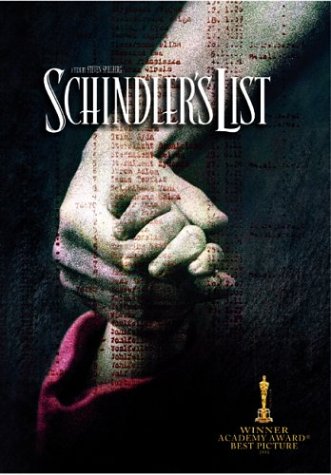
            A historical film by Steven Spielberg, The Schindler’s list, depicts the Holocaust focusing on a man who saved lives, Oskar Schindler. Oskar Schindler, an industrialist from Czechoslovakia, realizes that a war in Europe would be a great time to make money. The movie begins with Jews being forced to leave their homes, properties, and career and to live in overcrowded ghettos. It then shows us what Schindler was doing during that time. He was sitting on a fine table at a fancy nightclub in the city of Krakow occupied by the Nazi. As he drank alone, he scanned the clientele and slowly casts his eyes on the German officers. He plied them with food and wine which transformed a separate tabled nightclub into one party with a song for the Nazi Officials. He had made a connection between the Nazis and the Jews as he met Itzhs Stern, an accountant and a Jew, who helped him with the business. Itzhak Stern is an official of Krakow's Judenrat, a Jewish Council, who has contacts with the Jewish business community and the black marketers inside the Ghetto. The Jewish businessmen lend Schindler the money for the factory in return for a small share of products produced. Opening the factory, Schindler pleases the Nazis and enjoys his newfound wealth and status as "Herr Direktor", while Stern handles all the administration. Schindler hires Jewish Poles instead of Catholic Poles because they cost less almost getting nothing for it is paid to the SS). Workers in Schindler's factory are allowed outside the ghetto, and Stern falsifies documents to ensure that as many people as possible are deemed "essential" to the German war effort, which saves them from being transported to concentration camps, or being killed. Amon Goeth is then introduced, a man in charge of the camp where workers are housed. He was pure evil as he randomly kills people without any reason just to show his power. Schindler had to bribe him to stay in business with him. Such cruelty done by Amon Goeth caused Schindler’s change from an opportunistic man to a humanitarian.

            The story revolved around Oskar Schindler which was about power and forgiveness which is obvious on the words spoken by Amon Goeth, “I pardon you.” The amount of surprise and suspense were balance as well. Liam Neeson, as Oskar Schindler, was effective in portraying a womanizing businessman. He was such a flexible actor as he built a combination of self-confidence, indecision, and doubt. Even with the change from being a profiteer to a savior. Ben Kingsley, as Itzhak Stern, did a great as Schindler’s sidekick. He had also given an image of an adviser who gives implied messages to Schindler like the part when he said, “Whoever saves one life, saves the world entire.” Ralph Fiennes, as Amon Goeth, brilliantly portrayed his role well. He had intensely depicted an insane man who’s secretly in love with a Jew. We see in him a picture of a sad man with great pride. The setting was of course very appropriate especially for such story. The color used helped in the suspension of disbelief. It had effectively given the image of how the life would’ve seemed like during those times. The use of sex and music were also okay. It was appropriate for it was simply used to lift the mood, it was not too much nor too less. American films are known to be plot oriented but Steven Spielberg had shown a different style which is character oriented. 
     
           The symbolisms of the films were quite visible but hard to decipher. One of which is the little girl in red. She symbolizes Schindler’s change; A change from being a selfish profiteer to a caring savior. Another is the candle lit during the beginning and the end of the film which symbolizes a little glimmer of hope. Schindler himself is a symbol. He showed us that not all Germans during those times were as ‘evil’ as the others. The Factory owned by Schindler symbolizes the shelter of the Jews which also served as their protection. The List itself symbolized the lives of the Jews saved from the wrath of the Nazis. It may merely be pieces of papers but those papers save a thousand lives.

Over all, the movie gave the people the truth behind the horrors of the holocaust. My mother told me that I was lucky to have watched the whole film for during their time, the movie was restricted and parts were cut. This film is highly recommended for everyone to see. This would let them appreciate the life that they have just as it did to me. 

Freedom


           The story was about a mute woman, Ada McGrath, who was sent away by her father to marry a wealthy land owner, Alistair Stewart. She was shipped to an island together with her daughter Flora bringing her piano with them. The weather was not welcoming them upon their arrival yet she still stayed and waited for her husband to pick them up. Stewart, on his way to his wife, was clearly shy yet he showed respect and authority. He fetches his wife and child leaving the piano behind for his house had no room for it. Ada had been mute since she was six and the piano had been her only way of expressing her emotions. The great attachment she had with the piano was the reason as to why letting go of it was so hard. As her husband left the second day, she went to George Baines, an illiterate friend of her husband, to accompany her to the shore where her piano was left. She played the piano all day as her daughter danced. Baines’ facial expressions obviously showed that he had fancied Ada. The next day, Baines made a deal with Stewart; to trade in Ada’s piano with the swamp. Stewart agrees regardless of Ada’s refusal. Baines added that he would want Ada to teach him to play. At first, Ada refused to play it for she thought it was out of tune but as soon as she heard that it wasn’t, she immediately played it. Baines took pleasure on seeing Ada play which was the reason as to why he asked her to teach him by showing him as an alibi. He had even made a deal with her to play a number of keys with certain consequences. With the lusting going on, Flora had been left outside. As days passed, they were bound to be caught. Stewart found them but instead of stopping them, which I expected, he lay under the house and listened to them. He tried to win her but he had no hope. He chopped a finger from Ada out of anger but in the end, he still had to let go. In the end, Ada left with Baines and Flora to live a better life, sinking the Piano under the sea.

            I certainly felt angry towards the movie as to the betrayal done by Ada to her husband. But, I still couldn’t blame her for doing it. Baines was the complete opposite of Stewart. Stewart was more focused on tending and growing his land, having no romance with Ada while Baines was a desperate romantic. With the affection he showed towards Ada, such relationship was meant to happen.

            The movie is character oriented. The actors and actresses portraying the roles are very effective in drawing people’s emotions along with them. Holly Hunter, as Ada McGrath, is truly great in portraying the characters heavy and complicated emotions without the use of verbal dialogue. Harvey Keitel, as George Baines, also did great in his role as a mad, desperate lover. Sam Neill, as Alistair Stewart, also did well given his role as the confused husband. The actress who made the movie truly effective, worth watching, and entertaining was Anna Paquin as Flora McGrath. The movie would’ve been dull without her. The theme of the movie was about the expression of one’s love and being free. We could clearly see in the movie that each of the characters has its ways of showing their love. It had also shown Ada’s search of freedom. The setting, at a forest in New Zealand, was appropriate for the story as it gave a dream like image which, I think, is the style of the director Jane Campion. The cinematography was also great with the effect of the film that it brought like the travel from Scotland to New Zealand.

            In the beginning of the film, we’d see Ada’s fingers, which in our point-of-view would seem as if we were peeping on it. This also seemed like bars or the keys of the piano which symbolizes Ada’s imprisonment. The use of voice over may also denote her imprisonment as she said that she’d never speak again. In the end, the piano had been sunk in the ocean which basically implies that Ada is no longer imprisoned but was now a free woman. She had also practiced speaking as shown in later part of the ending.  According to Alan A. Stone, “Campion's symbolism, like Freud's, makes the connection between the sacred and the profane. Playing the piano is Ada's consuming and sacred passion, a cry of the free spirit up to heaven. But playing the piano also has a sexual meaning that comes straight out of the Freudian text as a symbol of autoeroticism. The man who is to be Ada's husband is oblivious to all this. He abandons the icon on the beach. No film ever had a more perfect title.”